Translate

Friday, 25 July 2014

NASA's X-43A and its Scramjet

NASA's X-43 its an experimental un-manned aircraft impulsed by a scramjet engine, which is designed to fly at speeds faster than Mach 10. It is part of the program Hyper- X  of experimental aircraft from NASA.

The first data obtained by the experimental vehicle of scramjet "feeding" demonstrated that its revolutionary engine worked succesfully nearly to Match 9.8 which is 11 265 km/h, while flying at a height of 33 000 metres.

Scramjet engines have no mobile parts, and compressess the air that passes through it, in such a way that combustion can happen. Another advantage in favour of the scramjet is that it has a valve that can regulate the fuel supply just how conventional aircraft do and unlike rockets, which produce a maximum propulsion while there is still fuel left.

A disadvantage of the scramjet engine is that it cant start by them selfes and needs to be accelerated by another aircraft untill a minimum speed of Match 3, or the scramjet aircraft could have an hybrid engine that could work has a turboreactor for take-off and landing, and as scramjet during the flight. Unfortunately this does not exist nowadays
Interview with Buzz Aldrin

The second man who stepped on the surface of the moon is interviewed about its moon experience and future interplanetary missions:


https://www.youtube.com/watch?v=sHlT8QaeEXs


Thursday, 24 July 2014

Abstract Algebra

Abstract algebra its the part of mathematis that studies algebraic structures such as groups, rings or vector spaces. many of these structures where totally defined in the 19th century, and, actually, the study of abstract algebra was motivated by the need for more precission in the mathematical definitions.

In abstract algebra, combined elements by diferent operations are not generally interpreted as numbers, being one of the reasons for why abstract algebra can´t just be considered a simple extension of arithmetics. The study of abstract algebra has allowed to observed with clarity the intrinsic logical statements where all maths and natural sciences are based uppon. Also, along the history, the algebraists discoverd logical structures that while apparently different very often they can be characterized by the same way with a little group of axioms.

The term abstrac algebra is used to distinguish this field fro  elemental algebra of common school algebra where it shows the correct rules to manipulate the formulae and algebraic expressions that concern bith real and complex numbers.
Picture of a Rubik's Cube
Abstrac algebra includes:

     · Quasigroups
     · Semigroups
     · Monoids
     · Groups
     · Integrity domains
     · Rings and bodies
     · Modules and vector spaces
     · Associative algebra and Lie algebra
     · Reticules and Boole algebras


EigenValues, EigenVectors & EigenSpaces


In linear algebra, the Eigenvectors of a lineal operator are the non-zero vectors that, when transformed by the operator, they give an escalar multiple of themselves, meeaning their direction is not changed. This scalar is called EigenValue. Normally, the transformation is completely determined by its EigenVectors and EigenValues. The joining of the EigenVectors with a common EigenValue is called and EigenSpace.


In the example of the famous drawring Mona Lisa by da Vinci, the image has been transformed and has been deformed in such a way that it's vertical axis has not changed.

The blue vector which goes from the chest to the shoulder has changed direction, while the red vector hasn´t. This means that the red vector is, therefore, an EigenVector of the transformation, while the blue vector isn´t. Because the red vector hasn´t changed in lenght, its EigenValue is 1. Every single vector in this direction are EigenVectors, with the same EigenValue. This makes the EigenSpace for this EigenValue.

First Manned Moon Landing

The Apollo 11 was the first manned spacecraft that landed safely on the surface of the Moon and returned back to Earth. The date was 20th July 1969, when Neil Amstrong and Buzz Aldrin where the first humans to step on the surface of the Moon. They spended about 2h 30mins in the surface of the Moon, where they collected 21.5kg of lunar material.

Apollo 11 was launched by a Saturn V rocket at the Kennedy Space Centre, and it was the fith manned mission of NASA's Apollo Program.

The spacecraft had three parts: the command module, for a cabin with a space for 3 astronauts, a service module, which supported the command modules with electrical power, propulsion, oxygen and water, and the lunar module, for landing on the moon.

They landed on the See of Tranquility, where they broadcasted on live TV when Amstrong stepped onto the lunar surface, which described the event as "one small step for a man, one giant leap for mankind.

Sunday, 13 July 2014

Communication Tools in the Aerospace Sector

Ever since the Wright Brothers did their first flight, there has allways been a question on how to cummunicate with the pilots in the air. First ground controls used the help of visuals to provide signals to the pilots. Then small portable advent radios came along, which for the first time allowed the pilots to cummunicate to the ground.

Nowadays, air-to-ground communication relies on many navigation systems on board and on ground. They now have the newest radio and GPS systems as well as internet and video capabililties.

Radars are also a increadibly usefull tool in air-to-ground communication. Today every single plane in the aerial space is tracked down by Air Traffic control towers across the world, by tracking a signal given off by a on-board divice called transponder. These act as a personal identification for each aircraft, which allows Control towers to inmediatly recognize a plane. They work by recognizing radar frequencies as they interact with the aircraft. Then the transponder which is alerted by the radar responds by sending a singnal back to the Air Trafic control tower, which then identifies the aircraft.

They are also helpful to avoid acollision with other aircraft or with the ground, as they also give information about height, speed, etc..

PechaKucha Presentations

PechaKucha is a presentation style where 20 slides, normally made with Microsoft PowerPoint or similar, are shown for 20 seconds each, giving a total  of 6' 40''. Therefore, the format  keep the presentations concise and fast-pace, which has powered many speaker events called PechaKucha Nights.

Here I will give some tips on how to do a good and effective 20 X 20 Pecha Kucha presentation:

·Images are they of the for doing an effective presentation. These images must have some connection with what you are speaking about, your key points, just as word-as-image style.

·Practice the presentaion. Memorizing the key ponts is essential for a PechaKucha presentation. It is recomended to have some sort of guide in a small piece of paper so you dont get blank in the middle of the presentaion, as the time will be running and will not stop.

·Don't wory if you finish speaking before the next slide comes. It is likely that it will appear midway through your sentece, which can be calculated to have a bit longer than 20 seconds per slide if timed and practiced correctly. This will make the presentation more polished  rather than having to wait untill the next slide appears.

Monday, 30 June 2014

Teamwork skills

Teamwork normally includes starting ideas within a team or having the team members cooperate with each other. Effective teamwork behaviour will involve a commitment to work with others to achive a goal. Being good with teamwork involves having some skills, which include:

·Conforming- This incudes behaving acording to the rules of the team.

·Flexibility-  This means to be able to adjust your priorities to match the ones of your group when necesary.

·Reliability- Being reliable means that you're able to follow asigned tasks with a minimal supervision.

·Punctuality- This means to arrive on time to meetings or events.

·Feedback response- responding acordingly to what other people say about your work.

·Following procedures- Doing the tasks that others have determined they should be done.

·Dependability- Being able to work at the same level of effort and excellence as other members of the group.
Public Speaking Techniques

There really are no trics to getting over with the fear of standing up and speaking to a croud of people. The only way to get more confortable when speaking in front of an audience is repetition, and also being confident about the content of your speach. The more you stand up and speak in public, the less fear you'll have each time.

Even though there a no trics on how to geting over with the fear of speaking in public, there are some things you can do, and some that are not recomended when standing in front of an audience.

Art Of Public SpeakingDo's:
·Using physical activity to get the audience's              attention.
·Making a starting statement or presenting a startling  statistic.
·Telling a theme related joke.
·Providing a quotation.
·Relating a relevant story.

Don'ts
·Begining with something like "Hi, my name is".
·Making a false start.
·Using a rhetorical question.
·Going overboard.
·Failing to consider how you'll get to the stage.
Mars Climate Orbiter communication problem

The Mars Climate Orbiter (MCO) was a space probe launched by NASA to study the MArtian climate, atmosphere, ands surface changes. It was lauched on December 11 1998, but the communication with the spacecraft was lost on September 23 1999, when the spacecraft went into orbital intersetion.

Mars Climate Orbiter 2.jpgThe reason of this communication failure was becase a ground-base computer software produced an output in non-SI units, while a second systems that used those results expected them to be in metric units. The software that calculated the total impulse produced by the thruster firings during the Trajectory Correction Maneuver-4 calculated the results in pounds-seconds, instead of the spected output of newtons-seconds. The trajectory alculation used these results to correct the predicted position of the spacecraft for the effects of the thruster firings. This unit error made the spacecraft to encounter Mars on a trajectory that brough it too close to the planet, which cuased the spacecraft to desintegrate due to atmospheric stress when passing through Mars upper atmosphere.

This error was previously noticed by at least two navigator, whose concerns were dismised. The execution of Trajectory Correction Maneuver- 5 was then considered, which was also in the schedule, but it was ultimately not done.
Animal Communication
Animal communication is the transfer of information from one or a group of animals to one or more aimals whichThis transfer of information may be deliberate, such as a courtship display, or it may be unintentional, such as a prey detecting the scent of its predator.

Animals have different ways or modes of communitating with other animals, and sometimes with themselves. These can be:

dog2·Visual-These includes gestures, facial expresions, gaze following, colour change or bioluminescent communication.

·Auditory- These can include vocal communication, which in many cases is essential for many rasks, including mating rituals, warning calls, etc. But not all animals use vocal communication. Many arthropods rub specialized body parts to produce sound, which purposes may be very similar to those animals which communicate vocally.

·Olfactory- This is the oldest method of communication, and also one of the least understood. This is because of a "noisy" nature with many chemicals in the environment, therefore really hard to focus on specifc ones. The primary function of using this method of communication is to detect resources.

·Electro- This is a rare form of communication in the animal kingdom. it is seen primary in aquatic animals which are capable of electroreception, which are also tied with n active sensory modality for electrolocation. These aquatic animals communicate by generating electric fields. The changes in the field are then detected by specialized organs, which can then be "translated" to information.

Other forms of animal communication can be touch, seismic, autocomunication and thermal.
History of Communication

Communication dates back to prehistory, where it has evolved from cave paintings and smoke signals to having an alphabet or communicating over VoIP Internet Telephony, going through pigeon post, mail, telephone, fibre optics, etc.

Communication can range from very subtle processes of information exchange , to full conversations and mass communication.

Human communication was revolutionized with speach aproximately 100.000 years ago, while symbols where developed about 30.000 years ago, and writing 5000 years ago.

The oldest known symbols are the cave paintings, created with the purpose of communication through time.

The next step in the history of communication are the petroglyphs, which where basically rock carvings in the surface. The first ones are dated arround 10.000BC.

Then came Pictograms, which where symbols that represented concepts, objects, activities, places or events. These then evolved into Ideograms, which where graphical symbols representing an idea. Pictograms could only represent something resembling their from; for example a circle could represent the Sun, but ideograms, on the other hand could represent more abstract concept. For example, the circle in the pictogram which represented the sun, could represent as an ideogram 'heat', 'light' or 'day'.

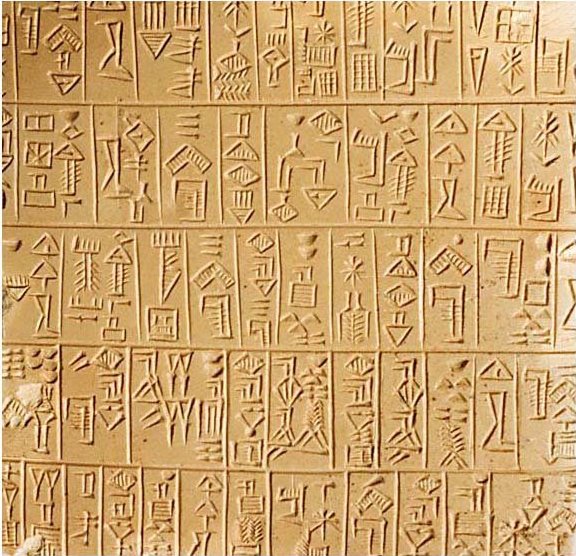
Finally came the writing, which oldest dates arround the Bronze age of the late 4000 BC, which were primarily logographic in nature, based on pictographic and ideographic elements.
Importance of Voice Modulation

Voice modulation is basically a change in stress, pitch, tone or loudness which gives the voice an atractive sound. Here are some tips for how to regulate your throat to be able to variate and modulate your voice:

·Speed- The speed must allways be neither to slow or two fast, but a speed for which the listener can understand.

·Pitch- It must be a confortable pitch for you so you dont damage your vocal chords.

·Volume- This depends on the situation and the place you're speaking. If you're speeking in front of an audience that is talking try to match your volume to the listener's volume, unless they are shouting.

·Pauses- Pauses are given to let the listener absorb all the previous information given. Also it si done to give emphasis and a dramatic effect.

·Empasis- Ephasis is done by putting pressure or focus on key words, so they provide a contrast to the words.

Sunday, 29 June 2014

Assertiveness

Assertiveness is a skill which is regulary refered to social and communication skills training. Assertive individuals aim to be neither passive nor agressive in their interactions with other people.
Even though everyone acts in a passive and agressive ways from time to time, sometimes their response is the result of a lack of self confidence, which leads to inappropriate expressions of what these people really nead to say.

Being assertive involves considering what you want, need, desire, as well as those of the other person. Being assertive means to encourage others to be open and honest so both peaple act appropriately.

Assertive behaviour includes:

  • Being open in expressing wishes, thoughts and feelings and encouraging others to do likewise.
  • Listening to the views of others and responding appropriately, whether in agreement with those views    or not. 
  • Accepting responsibilities and being able to delegate to others. 
  • Regularly expressing appreciation of others for what they have done or are doing.
  • Being able to admit to mistakes and apologise.
  • Maintaining self-control.
  • Behaving as an equal to others.
  • Saturday, 28 June 2014

    Writing effective e-mails
    Emails are a very well known form of communication for business aswell as for personal use. But studies have suggested that emails may cause tension, confusion or many other negative consequences hor a high percentage of people. So how do you write emails effectively so that these confusions don't occur?
    There are some steps you need to follow so you get your emails noticed and acted upon;

         ·Do not overcomunicate over emails- an average       office worker may receive from 5 to 80 emails         per day so before you begin to write an email,           ask yourself if it is really necesary.

         ·Make a good use of the "Subject" line- a blank         subjet line is much more likely to be deleted or         sent to spam, so allways use a few well chosen         words to grab the attention of the receiver.

         ·Keep the messages clear- keep ypur sentences         short an clear when used for business, just like         traditional business letters. If you need to talk           about more than one topic, consider writting             them on separate emails, unlike traditional                 letters.
         
         ·Be polite- unless you are communicating with someone you really know, avoid slang or inappropiate             abbreviations. Close your message with "Yours sincerely" or " Regards", etc. depending on the situation.

         ·Proofreading- before hitting the send button, re-read your email to check for spelling, punctuation or             grammar mistakes. Also pay attention to the leng of your email, as people are more likely to read the             shorter ones rather than the whole long ones.

    Social Networking

    Social networks are a group of applications and websites which allow users to communicate between them. Although social networks are used in universities, workplaces, and high schools, they are most popular online.

    These websites are known as social sites. These sites normally work as online communities in the internet, and sometimes, depending on the website, can share common interest such as hobbies or different lifestyles.

    Nowadays there are other types of social networks which include instant messaging. Examples of these can be Facebook, Whatsapp, Telegram, MSN, etc...

    Monday, 2 June 2014

    Saying "NO"

    Saying "no" for many people is something that they try to avoid, because they might thing they are bad people and may make them guilty, or just because they are also trying to avoid more stress or some kind of conflict.

    But saying "no" can sometimes be a powerful weapon that we will need to say someday in our lives to defend our ideas,and must be learnt as soon as possible, always respectfully with explications of why you are saying "no".

    At the end of the day, its the way of saying no, rather than the fact of actually saying no, which affects the outcome.


    Our body and gestures give away more information to whoever is speaking to you than anything that you can say. Body language can be seen in the hands, which can give away if you have a positive or negative attitude depending on how you have them, or if you are secure or insecure. 
    Also in the look; visual contact can reflect the interest of a person in a conversation... Then there are gestures such as how you sit down, how you mov your arms, legs, etc. All these gestures can tell, if recognized, many things about a person, that subconsciously is thinking but cant say it out loud, such as if the person is lying or saying the truth.
    Importance of Body Language

    Robot Contest Video Presentation

    This is a video that some class colleges and me did for presenting our robot in a contest. From this part onwards in this blog until i say otherwise, i will be posting entries that have to do with communication in engineering. I though that this video was appropriate for the subject as it shows how simple it is to explain to anyone without any knowledge in robotics how to build its own.

    Laureate RoboGuide Presentation